Sri Lanka National Cricket Team vs Ireland Cricket Team Match Scorecard: Complete T20 World Cup 2026 Report
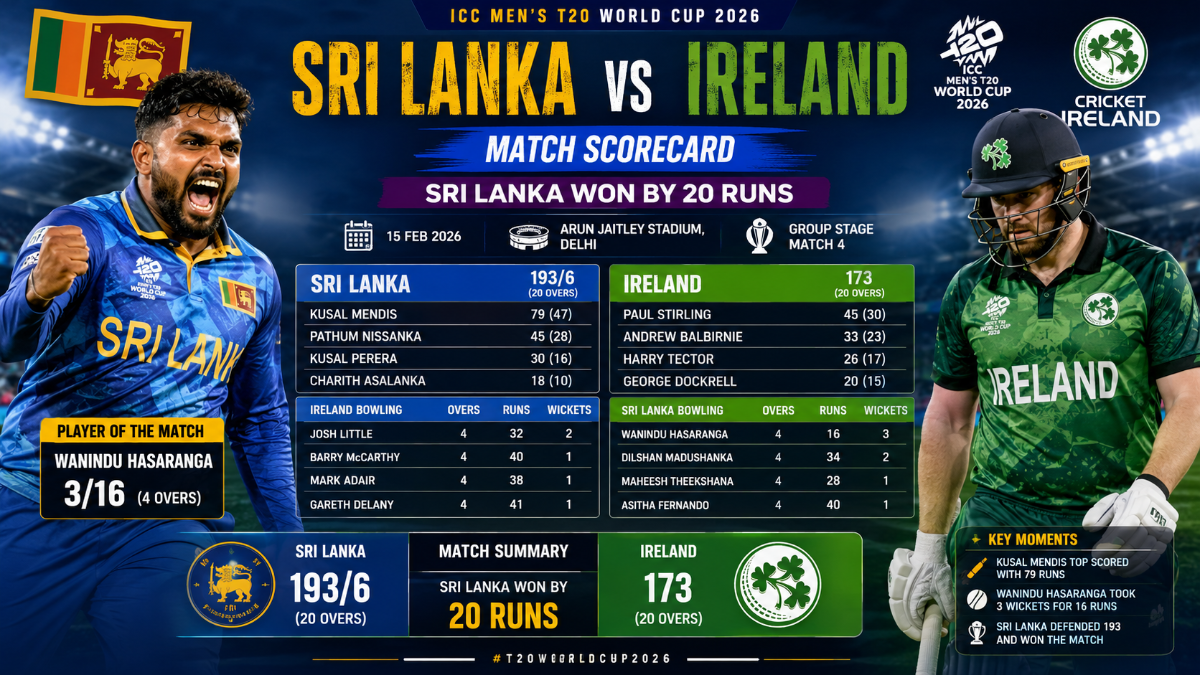
Sri Lanka defeated Ireland by 20 runs in their ICC Men’s T20 World Cup 2026 opener at the R. Premadasa Stadium, Colombo. Sri Lanka posted 163/6 in 20 overs, and Ireland were bowled out for 143 in 19.5 overs. Kamindu Mendis was named Player of the Match for a blistering 44 off just 19 balls that turned the innings around. If you’re searching for the complete Sri Lanka National Cricket Team vs Ireland Cricket Team Match Scorecard, this breakdown covers every batting figure, bowling spell, key partnership, and tactical decision that shaped the result. This was a match with all the hallmarks of a classic subcontinent World Cup opener-a dry, spin-friendly Colombo surface, a top order that stuttered early, a middle-overs rescue act, and a fielding collapse that arguably decided the contest more than any single batting or bowling performance.
Sri Lanka National Cricket Team vs Ireland Cricket Team Match Scorecard Overview
Sri Lanka won this T20 World Cup 2026 clash by 20 runs, finishing with 163/6 against Ireland’s 143 all out. On paper, a 20-run margin in a 20-over match looks comfortable. In practice, this contest swung on a handful of key overs, and Ireland were arguably closer to pulling off an upset than the final scoreline suggests.
Final Score Summary
| Team | Score | Overs | Result |
| Sri Lanka | 163/6 | 20.0 | Won by 20 runs |
| Ireland | 143 all out | 19.5 | Lost |
Match Details At A Glance
- Venue: R. Premadasa Stadium, Colombo
- Format: T20I, ICC Men’s T20 World Cup 2026, Group B
- Date: February 8, 2026
- Player of the Match: Kamindu Mendis (44 off 19 balls)
- Winning margin: 20 runs
- Pitch behavior: Dry, low, and increasingly spin-friendly as the innings progressed
The R. Premadasa Stadium has long had a reputation among cricket followers as a venue where surfaces tend to slow down considerably after the halfway stage of an innings, rewarding sides that can rotate spin options through the middle overs. That reputation held true here, shaping almost every major decision both captains made across the 40 overs of play.
Match Summary And Result Overview
Sri Lanka’s innings recovered from an early stumble to post a defendable 163/6, and their spin attack then dismantled Ireland’s chase during the crucial middle overs. This pattern-a fragile top order followed by a middle-order recovery, then bowling discipline through the death-has become something of a template for teams batting first on subcontinent surfaces in white-ball cricket generally, and it played out almost textbook-perfectly in this fixture.
Toss And Conditions
Sri Lanka won the toss and chose to bat first, a decision that made sense given how Colombo pitches typically slow down and grip more as a match wears on. Ireland’s own team management had reportedly flagged the surface as unusually dry in the build-up, expecting turn to become a significant factor as the game progressed. That assessment proved broadly accurate, with both sides’ spinners extracting more purchase from the pitch in the second half of the match than seamers managed with the new ball.
Read More: Ireland Cricket Team vs England Cricket Team Match Scorecard
Why The Toss Mattered Here
In tournaments played across multiple venues in the subcontinent, winning the toss at grounds like the Premadasa often hands a side a meaningful tactical edge, simply because chasing on a wearing, gripping surface under lights can become considerably harder than batting first. Sri Lanka’s decision to bowl first is not automatic in every match at this venue, but in this instance the team management clearly judged that posting a total and defending it with spin in the second innings offered the higher-probability path to victory.
Sri Lanka Batting Figures And Innings Breakdown
Sri Lanka’s batting card tells a story of two contrasting halves-a fragile top order and a counterattacking middle order that rescued the innings from mediocrity. Kamil Mishara fell for 28, chipping a slower ball straight to mid-off, while Pathum Nissanka was caught by Stirling for 24 as Ireland’s new-ball bowlers found early success against a top order that never fully settled.
Top Order Struggles
Sri Lanka’s opening pair failed to build the platform a 20-over innings typically needs. Pavan Rathnayake’s dismissal-top-edging an ill-advised upper-cut straight onto his own stumps-summed up a top order that simply couldn’t find rhythm against disciplined Irish new-ball bowling. By the time the power play phase had concluded, Sri Lanka were behind the tempo required for a competitive total on a surface that was only going to get harder to score on as it aged. This is a familiar problem for sides batting first at venues where conditions deteriorate: the batters who face the newest, truest portion of the pitch often struggle more than the middle order that arrives once the bowlers have settled into rhythm but before the pitch has fully deteriorated.
Middle Order Rescue Act
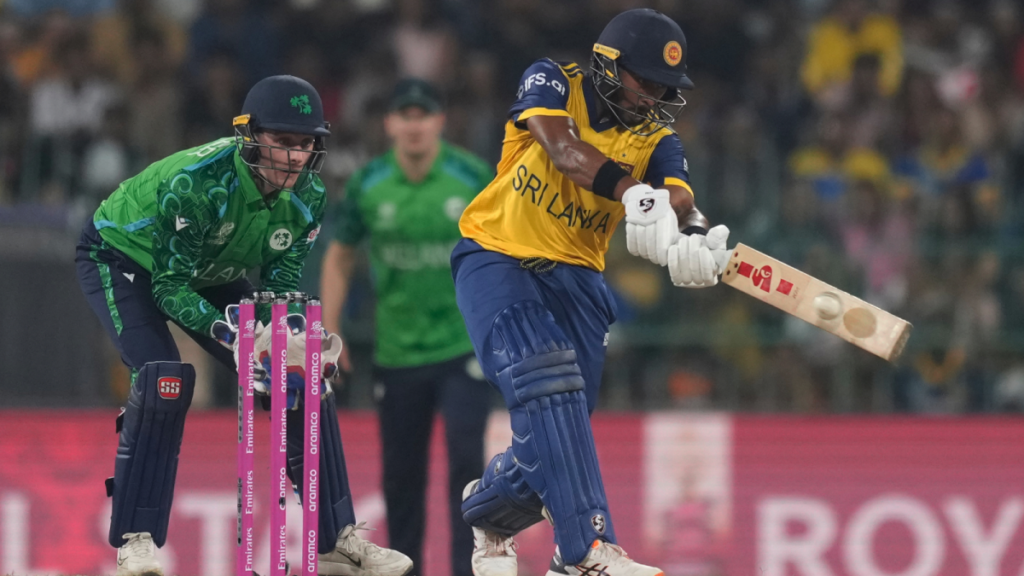
Kusal Mendis and Kamindu Mendis produced the defining partnership of the innings, adding 50 runs in just 26 balls to push the total from 103 to 153. Kusal anchored the innings patiently with 56 off 43 balls, rotating the strike intelligently and picking gaps in the field rather than forcing risky shots, while Kamindu accelerated dramatically once dropped catches gave him extra opportunities to free his arms. This burst is what separated a below-par total from a genuinely competitive one. A tense final over-which included a no-ball review that briefly reprieved Dasun Shanaka before he was eventually bowled-took Sri Lanka to their final total of 163/6. That final-over drama, while ultimately not changing the outcome significantly, illustrated how tightly balanced margins can be in T20 cricket, where even a handful of extra runs in the closing stages can swing a result.
Why This Partnership Mattered Tactically
The Kusal-Kamindu stand wasn’t just valuable for the runs it produced-it was valuable for how those runs were scored. By absorbing pressure in the first half of the partnership and then accelerating sharply once Ireland’s fielders began to falter, the pair effectively denied Ireland any opportunity to build sustained pressure through consecutive dot balls. In T20 cricket, sequences of dot balls often matter more to bowling sides than isolated wickets, and this partnership broke that rhythm decisively.
Ireland Batting Figures And Chase Analysis
Ireland’s chase started with genuine intent but stalled precisely when Sri Lanka’s spinners were introduced together, and that stretch of overs proved decisive in the end. Ross Adair set an aggressive tone at the top of the order with 34 off 23 balls, while Harry Tector’s 40 off 34 kept the required run rate manageable through the middle phase of the chase.
Positive Start From The Top Order
Ireland’s batting approach in the first ten overs was notably proactive rather than cautious. Both Adair and Tector looked to use the pace of Sri Lanka’s quicker bowlers before spin came fully into play, and for a sustained period it genuinely looked like Ireland were tracking the chase comfortably, staying ahead of or close to the required run rate without taking excessive risks. This is precisely the template modern T20 sides aim for when chasing on turning pitches: bank runs early against pace, then manage risk carefully once spin arrives.
Middle Overs Collapse
The chase fell apart in the space of two balls during the 16th over, when Wanindu Hasaranga had Ben Calitz stumped and then bowled Gareth Delany first ball, leaving Ireland at 120/6. That double strike removed Ireland’s ability to construct another meaningful partnership, and the lower order simply couldn’t find the boundaries needed to close an increasingly steep gap. Matheesha Pathirana finished the innings by bowling Matthew Humphreys with a well-executed yorker, and Ireland were dismissed for 143 with a single ball of their allocation unused.
Where The Chase Was Won And Lost
Looking at the shape of Ireland’s innings, the difference between a genuinely competitive chase and a comfortable Sri Lankan win came down almost entirely to that 16th-over sequence. Had Ireland navigated Hasaranga’s double-wicket over without losing both batters, they would have entered the final five overs with wickets in hand and a target that, given their earlier momentum, may well have been within reach. This is the nature of T20 cricket: single overs, rather than entire innings, frequently decide outcomes.
Sri Lanka Bowling Figures That Won The Match
Wanindu Hasaranga and Maheesh Theekshana combined for six wickets between them, and that spin partnership was ultimately why Sri Lanka’s total of 163 proved defendable rather than chaseable. Both bowlers took three wickets apiece across a combined eight overs, contributing to a joint return of 6 wickets for 48 runs that effectively strangled Ireland’s ability to accelerate through the middle overs of their chase.
Spin Twins Combine In The Middle Overs
Sri Lanka’s decision to introduce their two frontline spinners together, rather than staggering them across the innings, denied Ireland any opportunity to settle against one bowling style while targeting the other. This tactical approach-pairing a wrist-spin option with an off-spin or mystery-spin variation-is a common strategy on subcontinent pitches, and it worked almost exactly as designed in this instance. By committing to spin through the heart of the innings rather than searching for early pace-based breakthroughs, Sri Lanka’s captaincy backed conditions over conventional wisdom, and conditions rewarded that decision.
Death Overs Execution
Matheesha Pathirana’s yorker to finish the Irish innings underlined why fast bowlers with specific death-overs skill sets remain valuable even on spin-friendly surfaces. His ability to execute precise lines under pressure closed out the match cleanly once the middle order had already done the heavy lifting in reducing Ireland to a position from which recovery was extremely difficult. This division of labor-spin dominating the middle, pace closing out the death-is increasingly the norm for sides defending totals on subcontinent pitches.
Ireland Bowling Figures And Where They Fell Short
George Dockrell was Ireland’s standout bowler, finishing with figures of 2 wickets for 17 runs across his four overs, comfortably the best economy rate on either side. His control through the middle overs briefly threatened to pull Ireland back into genuine contention before Sri Lanka’s late acceleration through the Kusal-Kamindu partnership took the game away from them.
Dockrell’s Discipline Under Pressure
Dockrell’s left-arm spin choked Sri Lanka’s scoring rate for long stretches of the innings, consistently denying easy boundary options and forcing batters into working the ball into gaps rather than through the air. Had his fielders backed him up with the same level of discipline he showed with the ball, Ireland’s eventual target might have been considerably smaller than 164-potentially low enough to be within reach given how well Adair and Tector started their own chase.
The Rest Of Ireland’s Attack
Beyond Dockrell‘s economical spell, Ireland’s other bowlers found it harder to build sustained pressure once Sri Lanka’s middle order settled. This is a common challenge for associate and smaller full-member nations against top-tier batting line-ups: containing risk for 15 overs and then conceding a late surge that the bowling attack simply cannot fully recover from within the constraints of a 20-over innings.
The Key Partnership And Turning Point Of The Match
The 50-run stand between Kusal Mendis and Kamindu Mendis, compiled off just 26 balls, was the single biggest momentum shift of the entire match. Before this partnership, Sri Lanka were labouring, sitting around 103 for the loss of several wickets with the required acceleration looking difficult against a well-organized Irish attack. After it, they had a total capable of testing any batting lineup on a surface that was clearly assisting spin more with every passing over. On the other side of the innings break, Hasaranga’s double-wicket over in the 16th was Ireland’s mirror-image turning point-except this one worked emphatically against them rather than for them. Two dismissals in as many balls, at a stage when Ireland needed to be building momentum rather than losing wickets, effectively ended any realistic hope of victory.
Fielding And Momentum Shifts
Ireland dropped seven catches during Sri Lanka’s innings, and that lapse in the field-arguably more than their bowling or batting-was the single biggest factor behind the final margin. Every missed chance gave Sri Lanka’s in-form batters extra deliveries to find their range, and Kamindu Mendis in particular benefited from at least two chances going down before he cut loose in the closing overs. In a format as tight as T20 cricket, seven dropped catches routinely translate into somewhere between 15 and 20 extra runs across an innings, which aligns closely with the gap between what looked like a modest Sri Lankan total mid-innings and the eventual total of 163. This is why fielding standards, often the least discussed element of a match report, deserve just as much attention as batting and bowling figures when analysing why a result unfolded the way it did.
The Psychological Cost Of Dropped Catches
Beyond the direct runs conceded, dropped catches carry a psychological cost for a fielding side. Bowlers who see their deliveries go unrewarded due to fielding errors often lose a degree of confidence in their lengths and lines, while the batting side gains visible confidence with every reprieve. Watching Kamindu Mendis accelerate so dramatically after being given a second life is a clear illustration of how fielding lapses compound rather than simply add up in isolation.
Player Of The Match: Kamindu Mendis
Kamindu Mendis was named Player of the Match for his 44 off just 19 balls, an innings that transformed a stuttering total into a genuinely defendable one. His strike rate of over 230 in the closing overs of the innings was the difference between Sri Lanka finishing at a below-par score and setting Ireland a target that ultimately proved just out of reach for a chasing side that had started so promisingly. What made the innings particularly valuable was its timing. Arriving at the crease when Sri Lanka needed acceleration rather than consolidation, Kamindu immediately identified the bowlers and match-ups he wanted to target, and capitalized ruthlessly once Ireland’s fielding errors gave him the confidence to do so.
Tactical Analysis: Captaincy And Strategy
Sri Lanka’s tactical decision to pair their spinners together in the middle overs, combined with Ireland’s repeated fielding lapses, decided this match more than any single batting or bowling performance. Both captains made largely sound strategic decisions over the course of the 40 overs, execution, particularly in the field, is what separated the two sides on the day.
Sri Lanka’s Approach
Sri Lanka’s captaincy leaned on trusted spin options at the exact point in the innings when Ireland’s batters were looking to accelerate, denying them easy boundary options and forcing risky shot selections that eventually cost wickets. This is a textbook example of matching bowling resources to match situations rather than simply following a fixed bowling plan regardless of context.
Ireland’s Approach
Ireland’s batting approach was proactive and largely well-judged throughout the chase, their downfall stemming from fielding execution rather than any fundamental strategic error. Better catching during Sri Lanka’s innings could plausibly have kept the eventual target 15-20 runs lower, which on this surface may well have been within reach for a batting lineup that had shown genuine intent and composure at the top of the order.
Records And Statistical Context
This win extended Sri Lanka’s unbeaten men’s T20I record against Ireland to three matches from three, and left them one victory short of their 100th T20I win overall. For Ireland, the defeat marked a fifth consecutive loss at the ICC Men’s T20 World Cup, leaving them one match away from equalling their longest-ever losing streak in the tournament’s history, a six-game run dating back to 2009-2012. These numbers matter beyond simple trivia. Sri Lanka’s perfect head-to-head record against Ireland reflects a broader gap in white-ball depth and experience between a long-established full-member nation and a side still building its T20 World Cup pedigree. For Ireland, the streak of tournament losses adds pressure to a program that has repeatedly shown flashes of competitiveness against stronger sides without consistently converting those performances into results.
What This Result Means For Group B
Sri Lanka’s win gives the co-hosts an ideal start to their home World Cup campaign, banking two crucial points before facing stiffer competition later in the group stage. Playing at a familiar venue in front of a supportive home crowd, Sri Lanka will take significant confidence from finding a winning formula even after a stumbling start to their batting innings.
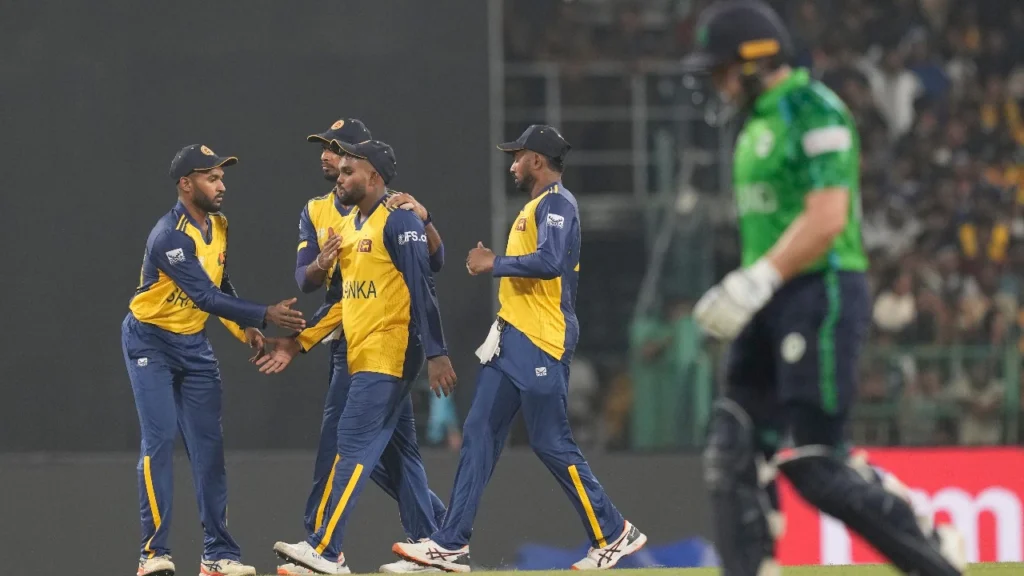
Ireland, by contrast, now face immediate pressure heading into their remaining group fixtures, needing wins against stronger opposition just to keep realistic qualification hopes alive. Given how competitive they were for large stretches of this match-particularly during the top-order phase of their chase-there are genuine positives for Ireland to build on, even in defeat. Improved fielding standards alone could plausibly have changed the outcome of this specific contest.
Broader Context: Why This Match Matters For The Tournament
World Cup openers often set the tone for a team’s entire campaign, both tactically and psychologically. For Sri Lanka, successfully navigating a shaky start to their innings and still finding a way to defend a moderate total sends a clear signal about squad depth and composure under pressure-qualities that tend to matter more as tournaments progress and pressure intensifies. For Ireland, the manner of the defeat, driven by fielding rather than fundamental skill deficits, suggests the gap between themselves and a Full Member nation like Sri Lanka may be narrower than the final scoreline indicates, provided they can tighten up in the field for their remaining matches.
Frequently Asked Questions:
Who won the Sri Lanka vs Ireland T20 World Cup 2026 match?
Sri Lanka won by 20 runs, scoring 163/6 and restricting Ireland to 143 all out.
Who was named Player of the Match?
Kamindu Mendis, for his innings of 44 runs off just 19 balls.
What was Sri Lanka’s final score in this match?
Sri Lanka finished on 163/6 in their allotted 20 overs.
What was Ireland’s final score in this match?
Ireland were bowled out for 143 in 19.5 overs, one ball short of a full innings.
How many wickets did Wanindu Hasaranga take?
Hasaranga took 3 wickets, including a crucial double-strike in the 16th over that stalled Ireland’s chase.
How many wickets did Maheesh Theekshana take?
Theekshana also finished with 3 wickets, combining with Hasaranga for 6 wickets between them across eight overs.
Who was Ireland’s best bowler in this match?
George Dockrell, with figures of 2 wickets for 17 runs, was the most economical bowler on either side.
How many catches did Ireland drop during the match?
Ireland dropped seven catches during Sri Lanka’s innings, a major factor behind the eventual result.
Where was the Sri Lanka vs Ireland match played?
The match was played at the R. Premadasa Stadium in Colombo, a venue known for its spin-friendly, wearing surfaces.
What is Sri Lanka’s head-to-head record against Ireland in men’s T20Is?
Sri Lanka have now won all three men’s T20I matches played against Ireland, extending an unbeaten record heading into this tournament.
What was the key turning point of the match?
The 16th over, when Wanindu Hasaranga dismissed Ben Calitz and Gareth Delany in consecutive deliveries, reducing Ireland to 120/6, is widely regarded as the decisive moment of the chase.
How did Ireland’s defeat affect their T20 World Cup history?
The loss marked Ireland’s fifth consecutive defeat at the ICC Men’s T20 World Cup, leaving them one match away from equalling their longest losing streak in tournament history.

Related Posts
Profilbau Victoria United vs Powergen Penal SC Match Scorecard: PPS Win by 4 Runs
India Legends vs West Indies Legends Match Scorecard: Binny 50, Pollard 74 Decide WCL 2025 Thriller