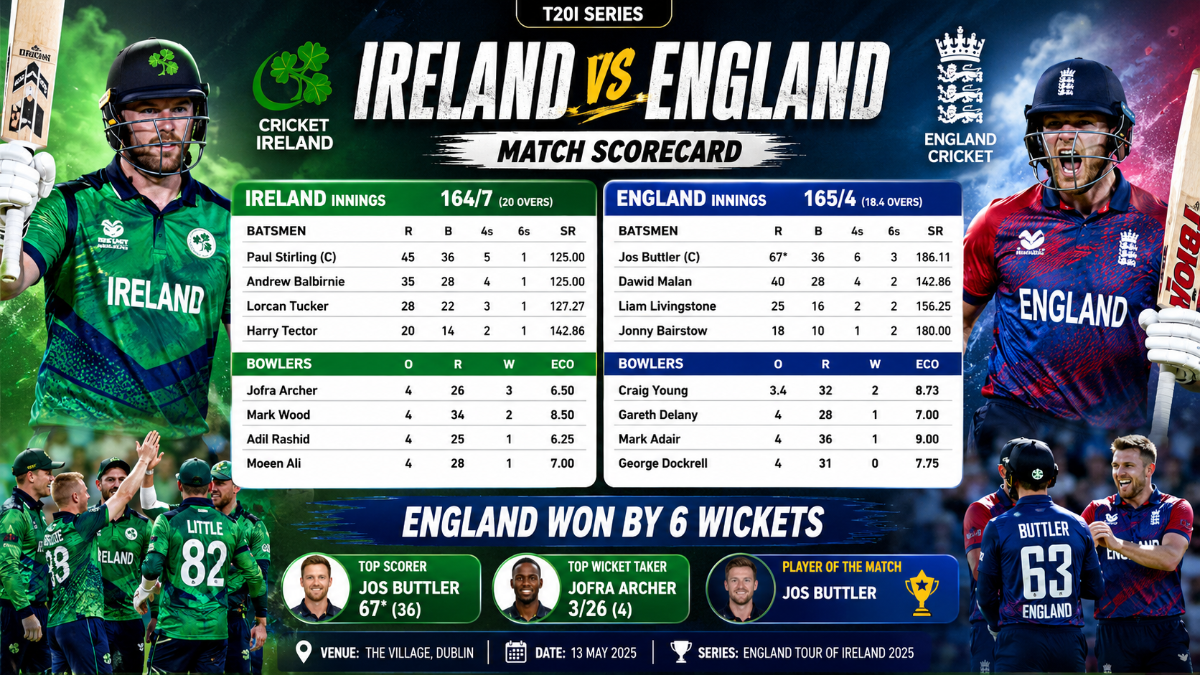
Ireland Cricket Team vs England Cricket Team Match Scorecard: Complete Series Breakdown, Batting Figures, Bowling Stats & Tactical Analysis
The Ireland Cricket Team vs England Cricket Team Match Scorecard for the 2025 T20I series tells a story of one dominant individual performance, one rain-ruined fixture, and one clinical bowling display that together sealed a 2-0 series win for England. Played entirely at The Village in Malahide, Dublin, this three-match contest showcased the growing gulf between a full-member powerhouse rebuilding its white-ball squad and an ambitious Irish side still searching for the batting depth to convert competitive totals into victories. This guide breaks down every innings, every batting card, every bowling figure, and the tactical decisions that decide each match-everything you need if you’re searching for the complete scorecard, statistical leaders, or head-to-head record between these two sides. Whether you’re a stats-focused reader hunting for exact figures, a fantasy cricket user assessing player form, or simply someone who wants to understand how this series unfolded beyond the final score line, this breakdown covers it all in one place.
Ireland Cricket Team vs England Cricket Team Match Scorecard: Overview
The complete Ireland Cricket Team vs England Cricket Team Match Scorecard confirms England won the series 2-0, with the opener going England’s way by four wickets, the second T20I abandoned before a toss could even take place, and the decider settled comfortably by six wickets. For anyone researching the full match scorecard, batting card, or bowling analysis of this rivalry, the numbers below cover every innings played, along with historical head-to-head context and standout statistical performances.
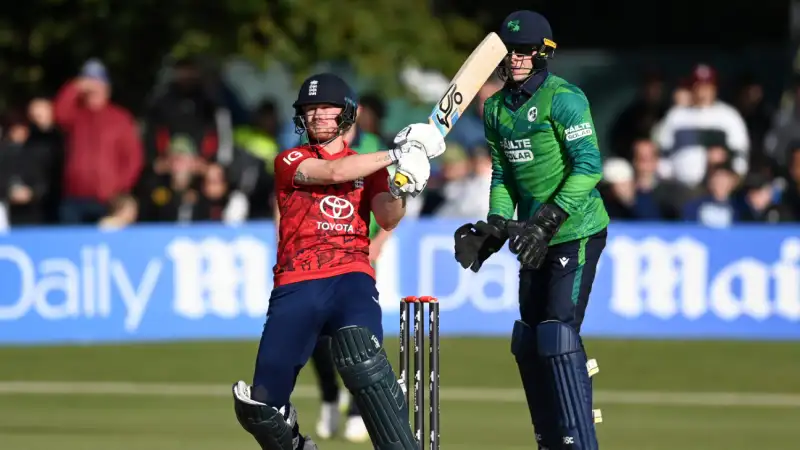
Match-by-Match Results Table
| Match | Venue | Result | Player of the Match |
| 1st T20I | The Village, Malahide, Dublin | England won by 4 wickets | Phil Salt – 89 (46) |
| 2nd T20I | The Village, Malahide, Dublin | Abandoned, no toss held | N/A |
| 3rd T20I | The Village, Malahide, Dublin | England won by 6 wickets | Adil Rashid – 3/29 |
This scoreline pattern is fairly typical in bilateral T20I cricket between a top-tier full-member nation and an associate side building international depth. Ireland competed hard in patches-posting a genuinely competitive total in the opener and fighting back with the bat in the decider-but ultimately lacked the sustained batting firepower or bowling variety to convert good starts into series-defining wins.
Why This Series Matters in the Bigger Picture
Beyond the immediate result, this series functioned as a testing ground for England’s next generation of white-ball players. Names like Jacob Bethell, Jordan Cox, Sonny Baker, and Rehan Ahmed all featured prominently, suggesting England used this fixture list to rotate and evaluate depth ahead of bigger tournament commitments. For Ireland, the series exposed a recurring theme in their recent cricket: batters getting starts and even reaching fifties, but partnerships breaking down at critical junctures, denying the side the platform needed to defend or chase competitive totals against stronger opposition.
1st T20I Full Scorecard: Ireland vs England Batting and Bowling Breakdown
Searching for the exact Ireland Cricket Team vs England Cricket Team Match Scorecard of the series opener? Ireland posted a competitive 196/3 in 20 overs before England chased it down in 17.4 overs, powered almost entirely by one destructive individual innings from the top order.
Ireland Innings: 196/3 in 20 Overs
Ireland’s innings relied on middle-order stability rather than power play fireworks, a tactical approach that paid dividends against an England attack still settling into its bowling rhythm on a fresh Dublin surface.
Read More: South Africa National Cricket Team vs Sri Lanka National Cricket Team Match Scorecard
| Batter | Runs | Notes |
| Ross Adair | 26 (25 balls) | Struck 3 fours and 1 six, strike rate over 100 |
| Paul Stirling | Contributed early momentum | Dismissed inside the powerplay window |
| Harry Tector | 61 not out | Anchored the innings from start to finish |
| Lorcan Tucker | 55 | Provided the acceleration in the back half |
Fall of wickets: 57-1, 67-2, 190-3-Ireland lost only three wickets across the full 20 overs, a testament to their batting discipline that day. The gap between the second and third wicket (67 to 190) spans 123 runs, meaning the Tector-Tucker partnership alone contributed the bulk of Ireland’s final total.
Tactical Read: Why Ireland’s Approach Worked
Ireland’s batting template in this innings was straightforward-absorb the power play overs without losing more than a couple of wickets, then accelerate through the back half once wickets are in hand. This is textbook modern T20 batting theory, and it worked well enough to produce 196, a total that would win most bilateral T20Is against associate-level bowling attacks. The issue wasn’t the strategy, it was the opposition’s ability to counter it with a chase built around one destructive innings rather than needing to grind through every phase.
England Innings: 197/6 in 17.4 Overs
England’s chase of 197 became a one-man show in the power play and middle overs, with the rest of the batting order playing largely a supporting role around one standout knock that took the game away from Ireland almost single-handedly.
| Batter | Runs | Notes |
| Phil Salt | 89 off 46 balls | 10 fours, 4 sixes, strike rate near 194 |
| Jos Buttler | 28 off 10 balls | Struck at over 280 strike rate in a rapid cameo |
| Middle order (Bethell, Curran, Ahmed) | Combined support | Kept the required rate manageable |
| Tom Banton | Finished the chase | Unbeaten at the moment of victory |
Fall of wickets: 74-1, 116-2, 130-3, 180-4, 181-5, 191-6-Notice how tightly bunched England’s middle-order collapse was between overs 15 and 17. Three wickets fell for just 11 runs in that span, briefly threatening to turn a comfortable chase into a nervy finish before England closed it out.
England reached the target with four wickets and 14 balls in hand, completing one of the more comfortable 197-run chases seen in recent bilateral T20I cricket, despite the late-innings wobble. This scorecard remains one of the most searched entries under Ireland vs England match scorecard queries because of Salt’s individual brilliance, which single-handedly dictated the tempo of the entire chase.
Turning Point of the Match
The decisive passage of play arrived between overs 10 and 15, when Phil Salt moved from a watchful start into full aggression mode, targeting Ireland’s death-overs bowlers before they had settled into their lines. By the time he was dismissed at 181/5 in the 16th over, England needed only 16 runs off 11 balls-a target that even a mid-order collapse couldn’t derail. This is a classic example of a single explosive innings neutralizing an otherwise well-constructed opposition total.
3rd T20I Full Scorecard: How England Sealed the Series 2-0
The final chapter of the Ireland Cricket Team vs England Cricket Team Match Scorecard shows a much tighter, lower-scoring contest compared to the series opener, decided by disciplined, plan-driven bowling rather than any single batting masterclass.
Ireland Innings: 154/8 in 20 Overs
Ireland’s innings suffered from a cluster of wickets in the middle overs, undoing promising starts from multiple batters and preventing any real momentum from building.
| Batter | Runs | Balls | Strike Rate |
| Paul Stirling (c) | 7 | 9 | 77.78 |
| Ross Adair | 33 | 23 | 143.48 |
| Harry Tector | 28 | 27 | 103.70 |
| Ben Calitz | 22 | 18 | 122.22 |
| Gareth Delany | 48 not out | 29 | 165.52 |
Fall of wickets: 30-1, 52-2, 56-3, 58-4, 90-5, 102-6, 102-7, 141-8-three wickets fell inside a single-run margin between the 8th and 9th over, the innings’ defining collapse. This cluster-losing wickets at 56, 58, and effectively stalling until 90-is the single biggest reason Ireland fell short of a genuinely defensible total.
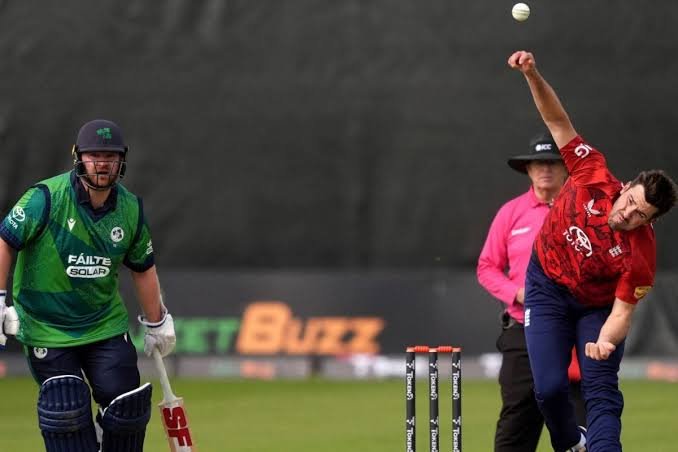
England Bowling Figures (3rd T20I)
| Bowler | Overs | Runs | Wickets | Economy |
| Adil Rashid | 4 | 29 | 3 | 7.25 |
| Jamie Overton | 4 | 17 | 2 | 4.25 |
| Liam Dawson | 2 | 9 | 2 | 4.50 |
| Rehan Ahmed | 3 | 24 | 1 | 8.00 |
Rashid‘s figures stand out as the best bowling performance of the series, arriving at a crucial phase when Ireland were attempting to rebuild their innings after the early clatter of wickets. His introduction directly after the powerplay disrupted Ireland’s rebuilding attempt before it could gather any momentum.
Bowling Strategy Breakdown
England’s captaincy and bowling plan in this match deserve specific credit. Rather than relying purely on pace to attack Ireland’s top order, the leadership used spin-Rashid and Dawson combined for five wickets between them at an economy under 6-to control the middle overs on a surface that offered some turn. This is a tactical shift from the series opener, where pace bowlers had shared the bulk of the workload. Reading conditions correctly and adjusting the bowling mix between matches is exactly the kind of in-series tactical flexibility that separates strong white-ball sides from average ones.
England Innings: 155/4 in 17.1 Overs
England’s chase of 155 featured contributions spread across the order rather than one dominant knock, a clear contrast from the series opener’s Salt-dominated chase.
| Batter | Runs | Balls | Strike Rate |
| Phil Salt | 29 | 23 | 126.09 |
| Jacob Bethell (c) | 15 | 11 | 136.36 |
| Jordan Cox | 55 | 35 | 157.14 |
| Tom Banton | 37 not out | 26 | 142.31 |
England completed the chase in 17.1 overs to win by six wickets, sealing a 2-0 series victory and closing out their Ireland tour on a dominant note. Jordan Cox’s 55 was particularly significant-it marked a strong statement innings from a batter competing for a limited number of top-order slots in England’s white-ball setup, and it demonstrated the squad depth that ultimately separated the two sides across the series.
Series Statistical Leaders: Ireland vs England Match Scorecard Highlights
Anyone comparing full scorecards across both completed matches will notice one clear trend-England’s batting depth and spin control decided the series, not any single dominant factor.
| Category | Player | Figures |
| Most runs | Phil Salt | 118 runs across two innings |
| Highest individual score | Phil Salt | 89 off 46 balls |
| Best strike rate (30+ runs) | Phil Salt | 193.48 |
| Best bowling figures | Adil Rashid | 3/29 |
| Most economical bowler (2+ wickets) | Jamie Overton | 4.25 economy |
| Top Ireland performer | Gareth Delany | 48 not out off 29 balls |
Phil Salt’s 118-run series haul, combined with Adil Rashid’s control-oriented spin figures, effectively summarizes why the Ireland Cricket Team vs England Cricket Team Match Scorecard tilted so heavily in England’s favor across the two completed fixtures. It’s worth noting that Salt achieved his tally across two very different match situations-one all-out aggression innings and one measured, situational 29-highlighting his tactical adaptability at the top of the order.
Ireland’s Standout Performers Despite the Series Loss
Even in defeat, several Irish players enhanced their reputations. Harry Tector’s unbeaten 61 in the opener showed his growing maturity as an anchor batter capable of controlling an innings from start to finish. Gareth Delany’s 48 not out in the decider, arriving after Ireland had slumped to 102/7, was arguably the most valuable individual contribution of the series from an Irish perspective-a genuine rescue act that at least gave Ireland a fighting total to defend.
Match Timeline: Key Moments From the 1st T20I
Understanding how the momentum shifted requires more than just the final scorecard-the over-by-over pattern shows exactly when the match tilted decisively toward England.
- Overs 1-7: Ireland build steadily through the powerplay without losing early wickets, setting a platform.
- Over 7.2: First breakthrough-Ireland slip to 57/1 as Ross Adair departs.
- Over 8.3: Second wicket falls at 67/2, briefly slowing Ireland’s momentum.
- Overs 9-19: Tector and Tucker rebuild patiently, adding 123 runs together without losing further wickets.
- Over 19.5: Ireland close their innings at 196/3, a total built on partnerships rather than boundary-hitting alone.
- Overs 1-4 (chase): England lose an early wicket at 74/1 despite a rapid start from Buttler.
- Overs 5-14: Salt takes over, methodically increasing the required rate pressure against Ireland’s bowlers.
- Over 15.3-15.6: Two wickets fall in quick succession, including Phil Salt’s dismissal for 89 at 181/5.
- Over 17.4: England complete the chase at 197/6, winning by four wickets with 14 balls to spare.
This timeline highlights how Salt’s innings single-handedly neutralized Ireland’s total well before the chase entered its final, tense overs-and how, despite a brief middle-order wobble late on, England’s platform was already secure enough to absorb the pressure.
Ireland vs England Head-to-Head Record in T20Is
Historical context matters for anyone researching the full Ireland Cricket Team vs England Cricket Team Match Scorecard archive, since head-to-head data reveals just how rare Ireland’s wins against England have actually been in this format.
| Team | Matches Played | Wins | Losses | No Result |
| England | 4 | 2 | 1 | 1 |
| Ireland | 4 | 1 | 2 | 1 |
Ireland’s only T20I win over England remains their memorable 5-run DLS victory at the 2022 T20 World Cup in Melbourne-a result still regarded as one of the biggest shock results in this rivalry’s short history. That win remains the exception rather than the pattern, with England’s superior batting depth and bowling variety typically deciding bilateral contests like this most recent series.
Why the Head-to-Head Gap Exists
The disparity in this rivalry largely comes down to squad depth and exposure to high-pressure cricket. England’s players regularly compete in franchise leagues worldwide, facing elite bowling and batting attacks across formats and conditions. Ireland’s player pool, while talented, simply gets fewer high-intensity repetitions against top-tier opposition, and that gap tends to show most clearly in tight, pressure-cooker finishes-exactly the kind of situations both the 1st and 3rd T20Is in this series presented.
Key Turning Points That Decided the Series
Two individual moments defined the outcome of this series more than any other passage of play across the two completed matches. Phil Salt’s counter-attacking 89 in the opener converted a chase requiring over 10 runs per over into a comfortable target within four overs, effectively deciding that match well before the final ten overs began. In the decider, Adil Rashid’s introduction straight after the powerplay dismantled Ireland’s middle order, taking three wickets in four overs and preventing what looked like a recovering Irish innings from pushing past 160.
Both moments share a common thread: England’s ability to identify and execute a specific plan at the exact right moment of the match, whether that meant unleashing an aggressive batter at the top of the order or introducing a wicket-taking spinner immediately after the fielding restrictions eased.
Captaincy and Tactical Decisions Across the Series
Jacob Bethell’s captaincy across this series showed a clear pattern of adaptability. In the opener, with England chasing a stiff target, the leadership trusted Salt to play his natural aggressive game rather than asking for early caution-a decision vindicated by the result. In the decider, facing a lower target, the bowling changes were far more calculated, introducing spin early to exploit any surface assistance rather than relying purely on pace. Ireland’s Paul Stirling, by contrast, had less room to maneuver tactically given his side’s thinner bowling and batting resources, but his decision to promote in-form players like Delany up the order in crunch moments showed sound game awareness even in a losing cause.
Why This Scorecard Matters for Ireland vs England Rivalry Tracking
For fans following associate-versus-full-member T20I contests, this Ireland Cricket Team vs England Cricket Team Match Scorecard offers a clear statistical snapshot of where the gap currently stands between the two sides. England’s depth-visible in contributions from Salt, Buttler, Cox, and Banton across two innings-contrasts sharply with Ireland’s reliance on two or three key batters per match to generate any competitive total. Tracking this scorecard alongside the broader head-to-head record gives a fuller picture of how the rivalry is trending heading into future fixtures between these two nations.
What Ireland Needs to Close the Gap
Based on this series alone, a few clear development areas stand out for Ireland. First, batting depth beyond the top four remains thin-both innings saw promising starts undone by clusters of wickets in the middle overs rather than a single dominant collapse. Second, death-overs bowling needs sharpening, since both England chases were completed with minimal late-innings drama despite occasional wobbles. Third, more exposure to high-pressure franchise cricket for Ireland’s core group would likely help close the composure gap visible in tight run-chases.
What England Takes Away From This Series
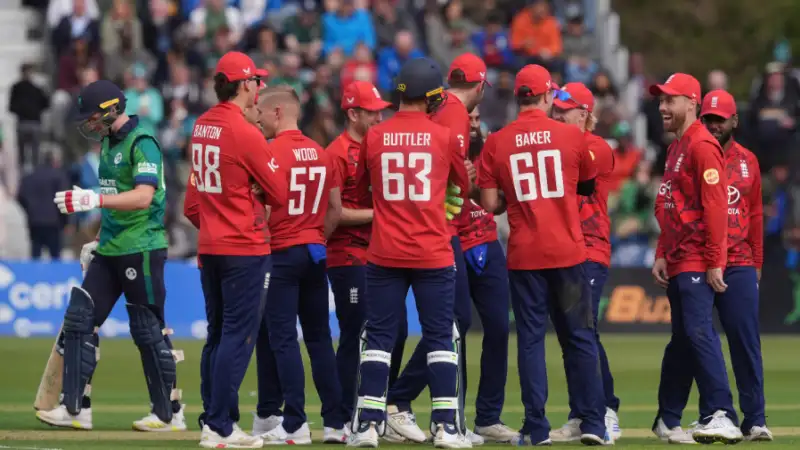
For England, this series functioned as a valuable audition for fringe players. Jordan Cox’s 55 in the decider, Sam Curran’s contributions in the opener, and the rotation of bowlers like Sonny Baker, Rehan Ahmed, and Luke Wood all provided useful data points for selectors ahead of bigger tournament commitments. A comfortable 2-0 series win against opposition that pushed them in patches is exactly the kind of low-risk, high-information fixture series management values in a busy international calendar.
Frequently Asked Questions:
What is the full Ireland vs England match scorecard for the 2025 T20I series?
England won the series 2-0. The 1st T20I finished with England 197/6 beating Ireland 196/3 by four wickets, the 2nd T20I was abandoned, and the 3rd T20I finished with England 155/4 beating Ireland 154/8 by six wickets.
What is the full Ireland vs England match scorecard for the 2025 T20I series?
England won the series 2-0. The 1st T20I finished with England 197/6 beating Ireland 196/3 by four wickets, the 2nd T20I was abandoned, and the 3rd T20I finished with England 155/4 beating Ireland 154/8 by six wickets.
Who scored the most runs in the Ireland vs England match scorecard?
Phil Salt was the leading run-scorer with 118 runs across two innings, including a top score of 89 in the series opener.
Who took the most wickets across the series?
Adil Rashid finished as the leading wicket-taker with figures of 3/29 in the decisive third T20I, supported by Jamie Overton and Liam Dawson with two wickets each.
What was Ireland’s highest score in the series?
Ireland’s highest total was 196/3 in the 1st T20I, built around fifties from Harry Tector (61 not out) and Lorcan Tucker (55).
Why was the 2nd T20I between Ireland and England cancelled?
Persistent rain in Dublin forced officials to abandon the match without a toss taking place, meaning the series remained level heading into the decider.
What is the head-to-head T20I record between Ireland and England?
England lead the rivalry with 2 wins from 4 matches, Ireland have 1 win, and one match ended in no result.
Where was the Ireland vs England T20I series played?
All three matches were scheduled at The Village, Malahide, in Dublin, Ireland, England’s usual touring venue for fixtures against the Irish side.
Did Ireland win any completed match in the series?
No. Ireland lost both completed matches and the second fixture ended without a result due to weather.
What made Phil Salt’s innings significant in the match scorecard?
His 89 off 46 balls, at a strike rate of nearly 194, single-handedly turned a tense 197-run chase into a comfortable England win, and his overall series tally of 118 runs made him the standout performer of the entire contest.
Which England player impressed most outside of Phil Salt?
Jordan Cox’s 55 off 35 balls in the series decider stood out as a strong statement innings from a batter competing for a regular top-order role.
How did Ireland’s middle order perform across the series?
Ireland’s middle order struggled for consistency, with clusters of wickets in both matches undoing promising starts, though Gareth Delany’s unbeaten 48 in the decider was a notable exception.

Related Posts
Profilbau Victoria United vs Powergen Penal SC Match Scorecard: PPS Win by 4 Runs
India Legends vs West Indies Legends Match Scorecard: Binny 50, Pollard 74 Decide WCL 2025 Thriller