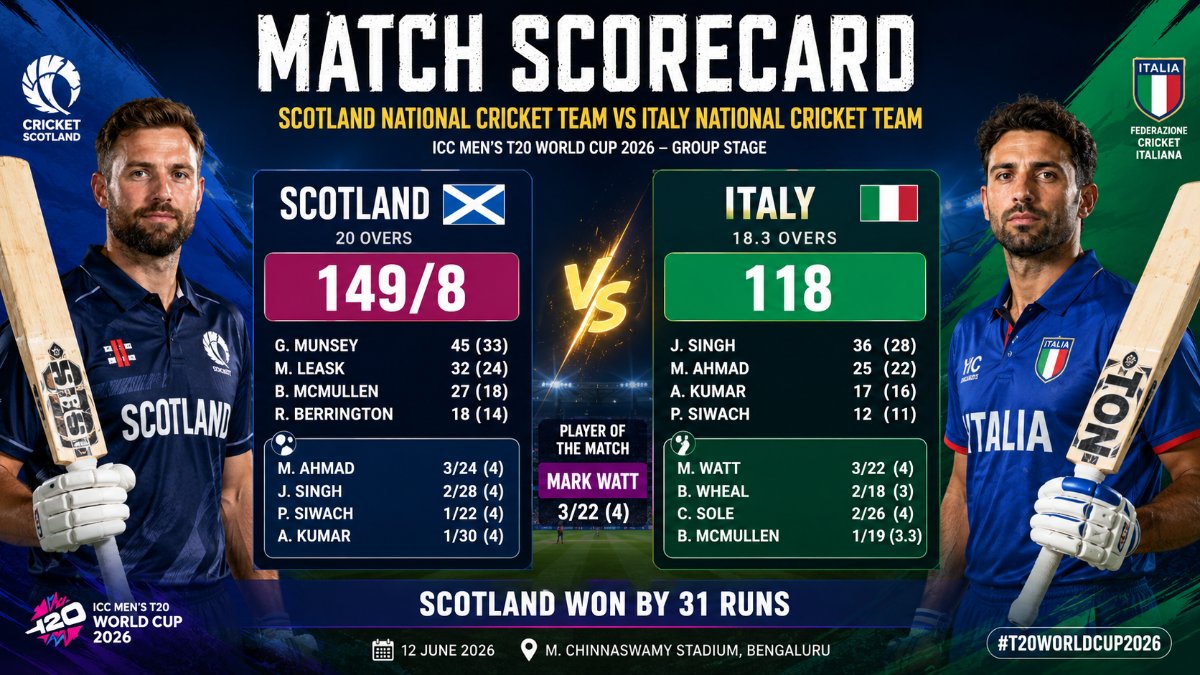
Scotland National Cricket Team vs Italy National Cricket Team Match Scorecard: Full Report, Stats and Analysis
Scotland beat Italy by 73 runs in the ICC Men’s T20 World Cup 2026 Group C fixture at Eden Gardens, Kolkata, with the Scotland National Cricket Team posting 207/4 before restricting Italy to 134 all out- the highest total by an Associate nation in men’s T20 World Cup history. This Scotland National Cricket Team vs Italy National Cricket Team match scorecard tells a story far bigger than the numbers alone, blending a record-breaking batting effort with a bowling performance that dismantled Italy’s tournament debut in under 17 overs. For a growing rivalry between two of European cricket’s most ambitious Associate nations, this was the kind of statement win that reshapes narratives heading deeper into the tournament.
Match Result Overview
Scotland defeated Italy by 73 runs, scoring 207/4 in 20 overs before bowling out the debutants for 134 in 16.4 overs. The result gave Scotland their first points of the T20 World Cup 2026 campaign after an opening defeat to West Indies, while it ended Italy’s maiden World Cup appearance on a bruising note. This was not a routine group-stage contest- Italy had actually beaten Scotland by 12 runs in the Europe Regional Final just seven months earlier to book their World Cup berth, which added an edge of unfinished business to the rematch. The scale of the margin surprised many observers who had expected a closer contest given the recent history between the two sides. Instead, Scotland delivered arguably their most complete all-round performance of the tournament so far, with both bat and ball clicking in the same fixture- a rare combination even at the highest level of white-ball cricket.
Match Summary Table
| Metric | Scotland | Italy |
| Final Score | 207/4 | 134 all out |
| Overs Faced | 20.0 | 16.4 |
| Result | Won by 73 runs | Lost |
| Top Scorer | George Munsey (84) | Benjamin Manenti (52) |
| Best Bowler | – | Michael Leask (4/17) |
| Toss | Lost | Won, chose to field |
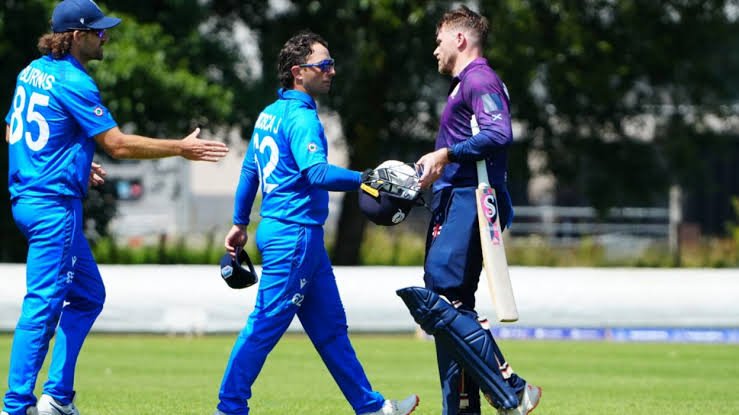
Match Facts at a Glance
- Venue: Eden Gardens, Kolkata
- Date: February 9, 2026
- Tournament stage: ICC Men’s T20 World Cup 2026, Group C, 7th Match
- Player of the Match: Michael Leask (22 not out off 5 balls, 4/17)
Why This Result Mattered Beyond the Score line
Scotland captain Richie Berrington had openly acknowledged the psychological weight of facing Italy again, calling it a chance to “respond strongly” after their earlier World Cup qualifier defeat. That context transformed a standard pool match into a statement performance, with Scotland needing a big win to salvage momentum after their tournament opener against the West Indies. For a team that has spent years fighting for legitimacy on cricket’s biggest stage, wins of this magnitude carry weight far beyond the two points on offer- they shape how selectors, broadcasters, and even future opponents perceive Scottish cricket’s trajectory. There’s also a broader storyline at play here. Both Scotland and Italy represent contrasting paths within European Associate cricket- one a long-established minnow constantly knocking on the door of consistent qualification, the other a newly resourced side built partly around experienced professionals with connections to global franchise cricket. Their rivalry, still in its early chapters, is quickly becoming one of the more compelling subplots of the tournament’s group stage.
Full Match Scorecard Breakdown
The Scotland National Cricket Team vs Italy National Cricket Team match scorecard shows a batting masterclass followed by a clinical bowling display, with Scotland’s middle order adding well over 100 runs in the back half of the innings to push the total beyond 200.
Read More: West Indies Cricket Team vs Scotland National Cricket Team Match Scorecard
Scotland Batting Scorecard
| Batter | Runs | Balls | Status |
| George Munsey | 84 | 54 | Out |
| Brandon McMullen | 41 | 18 | Not out |
| Michael Leask | 22 | 5 | Not out |
George Munsey anchored the innings with 84 runs off 54 balls, absorbing early pressure in the Power Play before accelerating through the middle overs. His innings was built on strong strike rotation and disciplined shot selection rather than early aggression, a method that allowed Scotland to avoid the kind of collapse that has derailed Associate-nation innings in previous tournaments. Brandon McMullen provided the ideal finishing touch with an unbeaten 41 off just 18 balls, targeting the shorter square boundaries at Eden Gardens with calculated aggression rather than wild hitting. Michael Leask then smashed 22 not out off only 5 deliveries in a cameo that included the six which pushed Scotland past the 200-run mark- a passage of play that effectively decided the match before Italy had even taken guard. This combination of a set anchor and explosive finishers is exactly the template modern T20 batting orders chase, and Scotland executed it almost perfectly. It’s a blueprint increasingly common across white-ball cricket at every level: one player absorbs risk early, banking deliveries, while others convert that platform into acceleration once field restrictions ease and bowlers tire.
Italy Batting Scorecard
| Batter | Runs | Status |
| Benjamin Manenti | 52 | Top scorer |
| Wayne Madsen | Did not bat | Dislocated shoulder |
Chasing a stiff target, Italy’s innings never found rhythm. Benjamin Manenti top-scored with a fighting 52, but wickets fell in clusters around him, preventing any real partnership-building. Manenti’s innings, in isolation, was a genuinely impressive display of composure under pressure- the kind of performance that suggests Italy’s batting depth isn’t as thin as the final scoreline might suggest. But a lone half-century against a required rate climbing steadily past 10 an over was never going to be enough without support at the other end. Italy’s chase was further complicated when captain Wayne Madsen dislocated his shoulder during the match and was unable to bat, removing their most experienced campaigner from an already difficult run chase. Madsen, a veteran of multiple domestic and franchise circuits, was specifically brought into Italy’s setup for exactly this kind of high-pressure situation- his enforced absence at the crease represented not just a lost wicket in the order but a loss of composure and tactical leadership when Italy needed it most.
Scotland Bowling Figures
| Bowler | Wickets | Runs Conceded |
| Michael Leask | 4 | 17 |
| Mark Watt | 2 | 24 |
| Ali Hasan | 1 | 21 |
Michael Leask finished with 4 wickets for just 17 runs, the standout bowling performance of the contest. His figures were built on variations in pace and length rather than raw speed, repeatedly deceiving Italy’s batters in the crucial middle-overs window when the chase’s momentum needed to be established. Mark Watt supported with 2/24, tightening the middle overs through consistent line and length that denied easy boundary options, while Ali Hasan chipped in with 1/21 to squeeze Italy’s scoring during a phase when the required run rate was already climbing past 10 an over. The collective bowling effort meant Italy never had a genuine platform-building phase in their innings. Where Scotland’s batting had a clear structure- anchor, then finishers- Italy’s chase lacked any equivalent framework once early wickets fell.
Key Turning Points and Momentum Shifts
The match turned decisively in two phases: Scotland’s death-overs assault that added a significant chunk of runs in the final five overs, and Michael Leask’s early breakthroughs in Italy’s chase that removed any hope of a stable partnership.
The Death-Overs Explosion
Scotland were competitively placed heading into the final five overs of their innings, but McMullen and Leask combined to accelerate sharply in that window alone. This surge is what separated a “good” total from a genuinely intimidating one, and it left Italy needing to chase at more than 10 runs per over from ball one- an asking rate that immediately shifted the psychological balance of the match before Italy’s openers had even settled. This kind of death-overs surge isn’t accidental. It reflects deliberate squad construction- Scotland’s team management has clearly prioritized recruiting genuine power-hitters capable of manufacturing boundaries in the final overs, rather than relying purely on top-order form. McMullen and Leask both fit that profile, and their impact in this match validates that selection philosophy.
Read Also: England Cricket Team vs Italy National Cricket Team Match Scorecard
Leask’s Early Strikes Broke Italy’s Resolve
Rather than waiting for the middle overs, Leask struck early and often, denying Italy the platform Manenti needed to build a genuine chase. Once Italy fell behind the required rate past the 10-over mark, the required run rate ballooned into the high teens, and the innings unraveled quickly thereafter. Chasing sides in T20 cricket depend heavily on maintaining parity with the required rate through the middle overs, once that gap widens beyond a certain threshold, batters are forced into increasingly desperate shot selection, which in turn produces more dismissals- a compounding effect that ultimately defined Italy’s innings.
The Psychological Weight of a Growing Deficit
There’s a tactical lesson embedded in how quickly Italy’s chase disintegrated. Once a required run rate crosses into territory that demands boundaries almost every over, even experienced batting orders start taking outsized risks simply to stay in the contest. Italy’s middle order, lacking the finishing depth Scotland possessed, had no answer once that threshold was crossed.
George Munsey’s Match-Defining Innings
George Munsey’s 84 off 54 balls was the single most important innings of the match, providing the platform that allowed Scotland’s finishers to attack freely in the closing overs.
Building an Innings Under Pressure
Munsey didn’t chase quick runs early. He absorbed the new-ball pressure, rotated the strike through the powerplay, and only truly opened up once he had settled into the innings. This patient approach ensured Scotland never had to rebuild after an early setback, giving the innings a stable spine around which the rest of the batting order could operate freely.
This kind of disciplined top-order batting is often undervalued in T20 analysis, which tends to fixate on strike rates and boundary counts. But Munsey’s innings is a textbook example of how controlling risk early in an innings creates the conditions for aggression later- without his platform, McMullen and Leask would have been playing recovery cricket rather than pure acceleration cricket.
The Impact on Scotland’s Scoring Rate
By the time Munsey was dismissed, Scotland had banked enough deliveries in hand for McMullen and Leask to play with total freedom in the death overs- a tactical dividend that directly produced the highest Associate total in T20 World Cup history. This sequencing- anchor first, then explosive finishers- is increasingly the gold standard for T20 batting units across all levels of the sport, from franchise leagues to international cricket.
Michael Leask’s Bowling Masterclass
Michael Leask’s all-round contribution- 22 not out with the bat and 4/17 with the ball- earned him the Player of the Match award and stands as the defining individual performance of the game.
Breaking Italy’s Middle Order
Leask’s four wickets came at crucial junctures, each one arriving just as Italy looked to stabilize. This pattern of striking at the start of a potential partnership is a hallmark of experienced T20 bowlers, and it’s precisely what denied Italy any sustained resistance. Bowlers who can identify and disrupt exactly these moments- rather than simply bowling tight lines throughout- tend to have outsized impact on match outcomes, and Leask’s spell is a clear illustration of that skill.
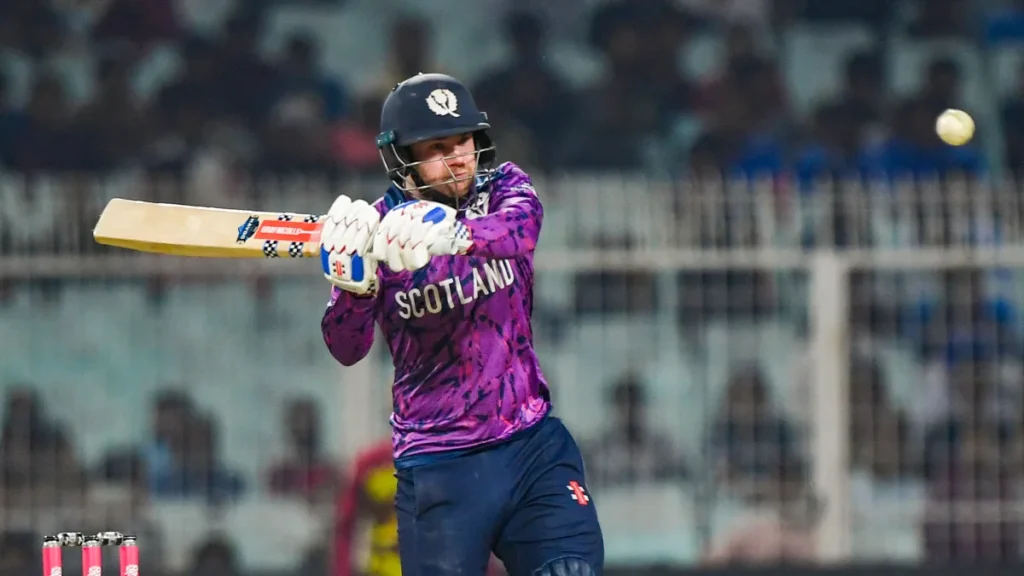
A Genuine All-Round Performance
Few players influence a T20 match with both bat and ball in the same fixture. Leask’s cameo lifted Scotland’s total meaningfully in the closing overs, and his bowling then removed nearly a third of Italy’s batting lineup- a rare double impact that made him the obvious Player of the Match choice. All-round performances of this nature are especially valuable for Associate nations, where squad depth is often thinner than full-member sides, making versatile players like Leask disproportionately important to overall team balance.
Tactical Analysis: Toss, Pitch and Captaincy
Italy’s decision to bowl first after winning the toss backfired, as the Eden Gardens surface offered little early assistance and instead rewarded Scotland’s patient batting approach.
The Toss Decision Under the Microscope
Winning the toss and choosing to field is a conventional T20 strategy, especially under lights, but it assumes early pace and bounce for the bowlers to exploit. Munsey’s calm start neutralized that assumption, and once Scotland’s innings gathered pace through the middle overs, Italy’s bowling attack had no fallback plan to slow the scoring rate down. Eden Gardens, as a venue, has historically offered a fairly true surface for batting once the ball loses its initial hardness- a factor that Italy’s captaincy and bowling group may not have fully accounted for when setting their fielding plans and bowling order.
Captaincy Decisions That Shaped the Contest
Berrington‘s decision to hold Leask back for a late cameo- rather than promoting him earlier in the order- paid off handsomely, giving Scotland a finishing weapon precisely when the innings needed acceleration. This kind of batting-order sequencing requires confidence in your top order to absorb pressure, and Munsey’s innings justified that trust completely.
On the other side, Italy’s inability to rotate bowling options effectively during the death overs allowed Scotland’s total to balloon beyond recovery range. Captaincy in the death overs is often about managing match-ups- bringing the right bowler against the right batter at the right phase- and Italy’s options appeared limited once Scotland’s finishers found their range.
Historic Records Set in This Match
Scotland’s 207/4 is now the highest total ever recorded by an Associate nation in men’s T20 World Cup history, surpassing the USA’s 197/3 from the previous tournament edition.
Key Records Comparison Table
| Record | Details |
| Highest Associate total in T20 World Cup history | Scotland 207/4 (surpassed USA’s 197/3) |
| Top individual score of the match | George Munsey- 84 off 54 |
| Best bowling figures of the match | Michael Leask- 4/17 |
| Player of the Match | Michael Leask |
| Margin of victory | 73 runs |
Why These Records Matter for Associate Cricket
Records like this signal how quickly the gap between full-member and Associate nations is narrowing in white-ball cricket. A total of 207 against a T20 World Cup opponent, built on genuine power-hitting depth rather than fortunate boundaries, reflects structural improvement in Associate team preparation and coaching investment across European cricket. This matters for the sport’s broader development conversation. Every time an Associate nation posts a total that would be competitive against full-member opposition, it strengthens the argument for expanded funding, more fixtures against established Test-playing nations, and greater visibility for these programs at global tournaments.
Head-to-Head Battle Between Scotland and Italy
Scotland now holds a stronger recent head-to-head record against Italy in T20 cricket, reversing the outcome of their previous meeting in the Europe Regional Final.
Head-to-Head Table: Recent T20 Meetings
| Match | Winner | Margin | Context |
| Europe Regional Final (earlier same year) | Italy | 12 runs | Qualification decider |
| T20 World Cup 2026, Eden Gardens | Scotland | 73 runs | Group C, Italy’s tournament debut |
The Rivalry’s Recent History
Italy’s 12-run win over Scotland in the qualifying stages had been a genuine upset, making this rematch one of the more closely watched fixtures of the tournament’s opening round. Scotland’s emphatic 73-run response effectively settled that argument, at least for this World Cup cycle, and restored the competitive hierarchy that most analysts had expected heading into the qualification process.
What the Rivalry Means for European Cricket
Both nations represent the growing depth of European Associate cricket, and fixtures between them carry weight beyond a single scoreline- they influence funding conversations, player pathway investment, and future qualification seeding for tournaments to come. Scotland’s longer history in Associate cricket gives them an institutional advantage in depth and experience, while Italy’s more recently assembled squad- bolstered by players with connections to other cricketing nations- represents a different development model entirely. As this rivalry matures over future tournament cycles, matches like this one will likely be referenced as pivotal data points in assessing which development pathway produces more sustainable competitive success.
Impact on T20 World Cup 2026 Group C Standings
The win moved Scotland onto the points table with their first victory of the tournament, while Italy’s tournament debut now carries an 0-1 record alongside a heavily damaged net run rate.
Group C Impact Table
| Team | Result | Points Status | Net Run Rate Impact |
| Scotland | Won | First points of tournament | Improved significantly |
| Italy | Lost | 0-1 record | Damaged heavily |
Scotland’s Path Forward in the Group
A comprehensive win like this doesn’t just deliver two points- it repairs net run rate after an opening defeat and restores dressing-room confidence heading into tougher fixtures later in the group phase. Net run rate frequently becomes the deciding factor in tightly contested groups, making the margin of victory here potentially as valuable as the win itself.
Italy’s Challenge After a Difficult Debut
For a debutant nation, absorbing a 73-run defeat alongside a captain’s mid-match injury is a tough combination to overcome. Italy will need a swift response in their remaining group matches to keep their qualification hopes realistic, and Madsen’s injury status will be a key storyline to track heading into their next fixture.
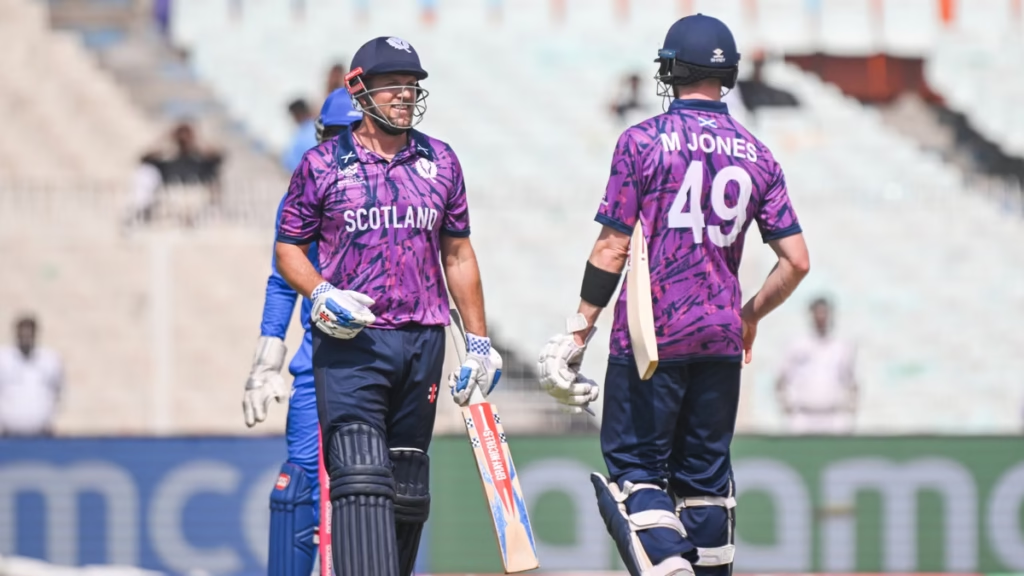
What’s Next for Both Teams
Scotland will look to carry this momentum into their next Group C assignment, aiming to build a case for progression to the knockout stages on the back of an improved net run rate and clear tactical clarity in both batting and bowling departments. Italy, meanwhile, face selection questions around Wayne Madsen’s shoulder injury and its impact on their remaining lineup, alongside broader questions about how to translate individual performances like Manenti’s fighting half-century into collective results. Both teams’ next fixtures will heavily influence where this Scotland National Cricket Team vs Italy National Cricket Team match scorecard sits in the broader context of the tournament’s qualification race- and whether this result proves to be a turning point for Scotland’s campaign or simply one bright afternoon in an otherwise difficult group stage.
Frequently Asked Questions:
Who won the Scotland vs Italy T20 World Cup 2026 match?
Scotland won by 73 runs, scoring 207/4 before bowling Italy out for 134.
What was Scotland’s final score against Italy?
Scotland finished on 207/4 in 20 overs.
What was Italy’s final score in the match?
Italy were bowled out for 134 in 16.4 overs.
Who was named Player of the Match?
Michael Leask, for his unbeaten 22 off 5 balls and bowling figures of 4/17.
Who scored the most runs in the match?
George Munsey top-scored overall with 84 runs off 54 balls for Scotland.
Who took the most wickets in the match?
Michael Leask took 4 wickets for 17 runs, the best bowling figures of the game.
Is Scotland’s 207/4 a T20 World Cup record?
Yes, it is the highest total ever recorded by an Associate nation in men’s T20 World Cup history.
Where was the Scotland vs Italy match played?
The match was played at Eden Gardens in Kolkata.
Did Italy’s captain bat in this match?
No, Wayne Madsen was unable to bat after dislocating his shoulder during the game.
How does this result affect Group C qualification?
Scotland’s win gave them their first points of the tournament and improved their net run rate, while Italy’s defeat leaves their qualification hopes under pressure heading into remaining fixtures.
Had Scotland and Italy played each other before this World Cup match?
Yes, Italy beat Scotland by 12 runs in the Europe Regional Final around seven months earlier, which had secured Italy’s World Cup qualification.
What made George Munsey’s innings so important tactically?
His patient approach through the power play and middle overs built the platform that allowed Scotland’s finishers to attack freely in the death overs, directly enabling the record-breaking total.

Related Posts
Profilbau Victoria United vs Powergen Penal SC Match Scorecard: PPS Win by 4 Runs
India Legends vs West Indies Legends Match Scorecard: Binny 50, Pollard 74 Decide WCL 2025 Thriller